 Finland
City guide · Finland
Helsinki
About Helsinki
Helsinki, the capital of Finland, is a compact seaside city on the Gulf of Finland, known for its Neoclassical centre, Nordic design and close connection to the sea. It was founded in 1550 and became the capital in 1812, during the period of Russian rule.
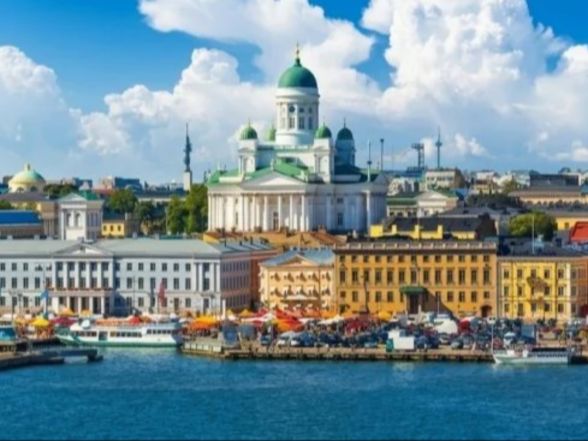
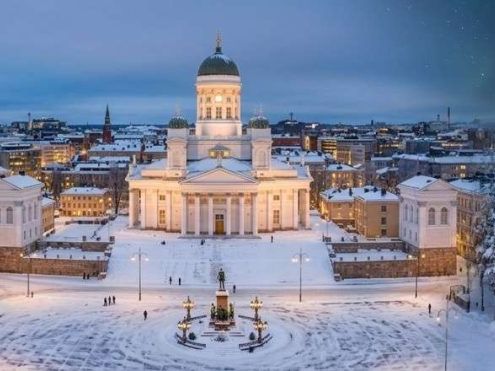
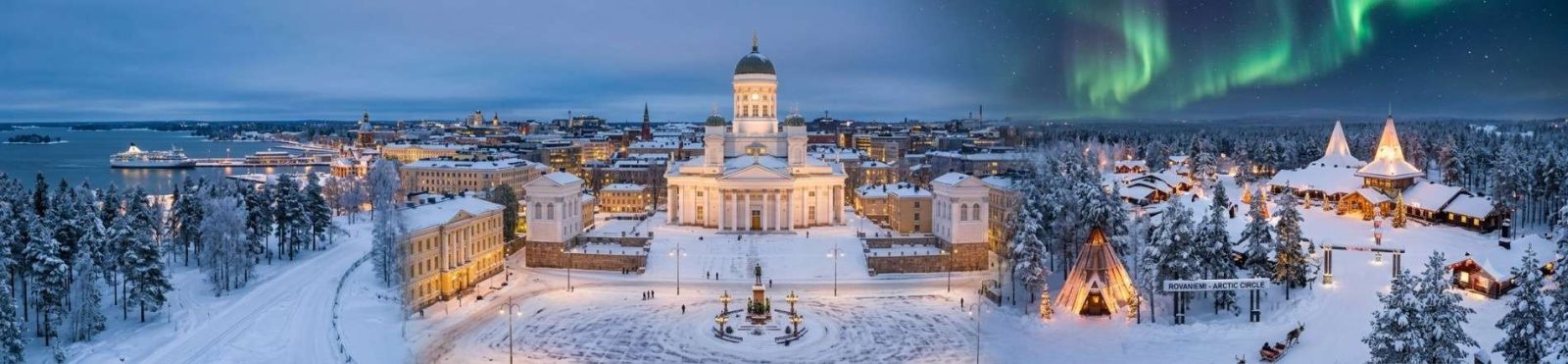
Key sights include Senate Square and the white Helsinki Cathedral, the red-brick Uspenski Cathedral, the Market Square by the harbour, the Esplanadi park, the Temppeliaukio Rock Church carved into bedrock and the Sibelius Monument. A short ferry ride leads to Suomenlinna, an island sea fortress listed by UNESCO.
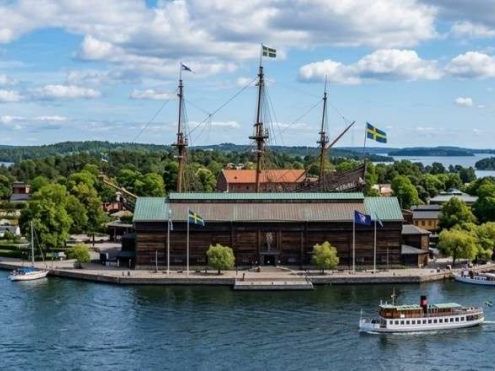
Two nights are usually enough. Tallinn in Estonia is about two hours away by fast ferry, making an easy day trip, and the historic town of Porvoo is about an hour by road. Helsinki also connects with Stockholm by overnight ferry and with Lapland by flight or overnight train.
Families and groups often enjoy the harbour islands in summer, and a sauna experience is a typical Finnish activity to include.
Practical Information
Useful to know before your group arrives in Helsinki.
Loading typical weather…
Typical weather is not available right now. Please try again later.
| High °C |
|---|
| Low °C |
| Rainy days |
Helsinki has a cool northern climate shaped by the Baltic Sea, with mild summers and long, cold winters.
- Spring (March–May): slow to warm up, with highs reaching around 14–15°C by May.
- Summer (June–August): mild, with highs around 20–22°C and very long daylight hours.
- Autumn (September–November): cooling, increasingly wet and dark.
- Winter (December–February): cold, with highs around 0 to −2°C, short days and snow or ice.
June to August is the most popular time to visit. Pack layers and a rain jacket in summer, and thermals, a warm coat and boots with good grip in winter.
- Arriving: Helsinki Airport (Helsinki-Vantaa) is linked to Helsinki Central Station by train in about 30 minutes. The airport is in fare zone C, so make sure the ticket covers zones A, B and C.
- Getting around: trams, metro, buses and local trains run by HSL cover the city, and the ferry to Suomenlinna is included in regular public transport tickets. The centre is easy to walk.
- Tickets: single and day tickets are sold through the HSL app and at ticket machines.
- Groups: coaches can drop groups close to Senate Square and the Market Square; the harbour area is the meeting point for ferries and boat tours.
Mobile data: for Indian travellers, an eSIM or a European data plan bought before travel usually costs much less than Indian international roaming packs. Local prepaid SIMs are sold at the airport and in shops (passport may be requested). Finland is in the EU, so an EU SIM or eSIM also works across other EU/EEA countries under EU roaming rules.
Wi-Fi: free Wi-Fi is widely available in hotels, cafés and many public spaces.
Power: 230 V with Type C/F sockets. Indian Type D plugs do not fit, so a universal adapter is needed.
Indian and Nepali restaurants are common in Helsinki, and vegetarian food is easy to find. Halal food is available at a number of Middle Eastern and Turkish places. Jain meals are best requested in advance through the DMC or restaurant.
Finnish foods that suit vegetarians include karjalanpiirakka (Karelian pies of rye crust with rice filling), leipäjuusto (baked bread cheese, often with cloudberry jam) and korvapuusti (cinnamon buns). Supermarkets such as K-Market, S-Market, Prisma, Alepa and Lidl are useful for snacks, fruit, milk and bread.