 Portugal
City guide · Portugal
Lisbon
About Lisbon
Lisbon, the capital of Portugal, spreads across hills above the wide estuary of the River Tagus. Rebuilt after the great earthquake of 1755, it combines elegant squares with steep, tiled lanes and sweeping viewpoints, and has a mild climate for much of the year.
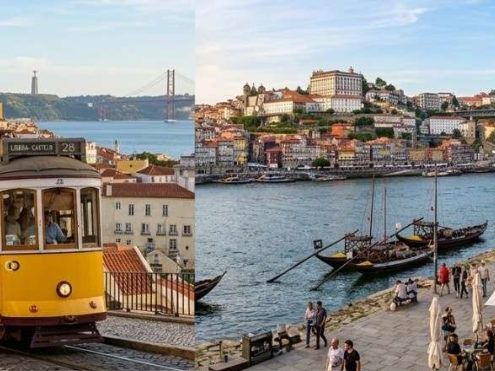
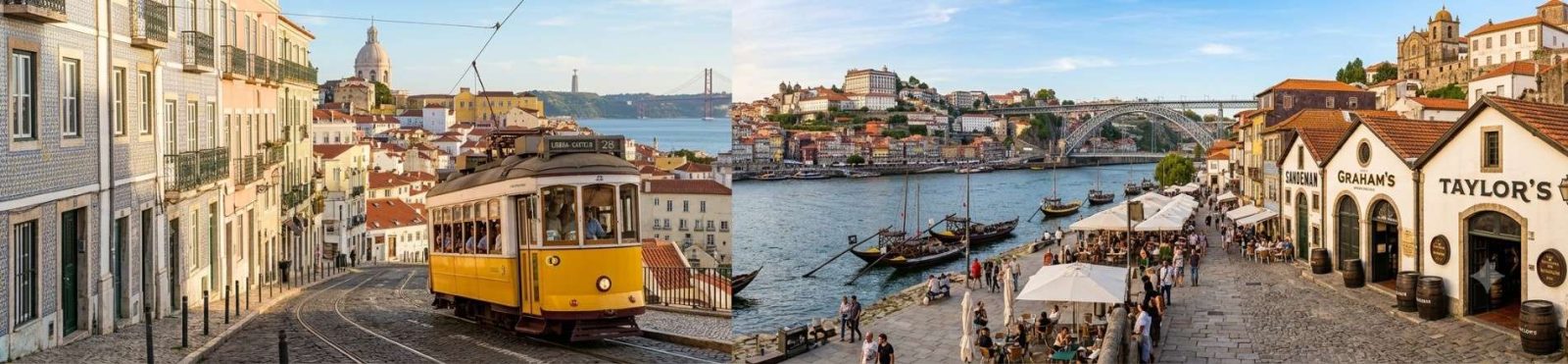
Highlights include the Alfama district and São Jorge Castle, the grand Praça do Comércio, the Baixa, Chiado and Bairro Alto areas, and the city's many viewpoints. In Belém, the Jerónimos Monastery and Belém Tower are UNESCO-listed, and the vintage yellow trams that climb the hills are a symbol of the city. The Oceanário in Parque das Nações is popular with families.
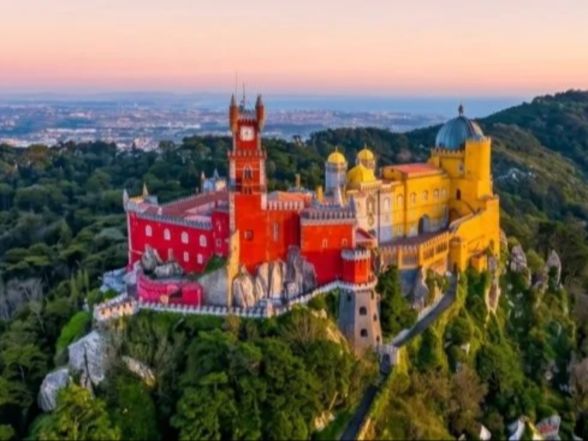
Three nights allow time for day trips. Sintra, with its palaces, is about 40 minutes by train, as is the seaside town of Cascais. Fátima is about an hour and a half by road, and Porto about three hours by train.
Lisbon has a special link with India: Vasco da Gama sailed from here on his voyage to India in 1497, and his tomb lies in the Jerónimos Monastery. The city's Goan heritage and South Asian community also make it one of the easiest European capitals for Indian food.
Practical Information
Useful to know before your group arrives in Lisbon.
Loading typical weather…
Typical weather is not available right now. Please try again later.
| High °C |
|---|
| Low °C |
| Rainy days |
Lisbon has a Mediterranean climate influenced by the Atlantic, with hot, dry summers and mild, wetter winters.
- Spring (March–May): highs rising from about 18°C to 23°C, pleasant with occasional showers.
- Summer (June–August): highs around 27–29°C, sometimes much hotter, with strong sunshine and little rain.
- Autumn (September–November): highs falling from about 27°C to 17°C, with rain returning later in the season.
- Winter (December–February): highs around 14–16°C, mild but with rainy spells.
Spring and early autumn are the best times to visit. Pack sun protection in summer, a light rain jacket in winter, and comfortable shoes with good grip for steep, polished cobbles.
- Arriving: Lisbon Humberto Delgado Airport lies about 7 kilometres north of the centre. The metro reaches the city centre in about 25 minutes with one change, and a taxi takes about 20 minutes outside rush hour.
- Getting around: The metro, buses, historic trams and river ferries cover the city. Walking is rewarding but hilly.
- Tickets: The reloadable navegante occasional card is used on the metro, buses, trams and many trains; day tickets are available.
- Day trips: Trains to Sintra leave from Rossio station and trains to Cascais from Cais do Sodré, each taking about 40 minutes.
- Groups: Coaches cannot enter the narrow streets of Alfama or Bairro Alto, so groups are set down nearby and continue on foot.
Indian travellers usually save money with an eSIM or European data plan bought before departure, rather than an Indian international roaming pack. Local prepaid SIM cards are sold at the airport and in phone shops; a passport is needed at purchase. An EU SIM or eSIM also works across other EU/EEA countries under EU roaming rules.
Free Wi-Fi is common in hotels and cafés. Portugal uses 230 V with Type C/F sockets; Indian Type D plugs do not fit, so pack a universal adapter.
Lisbon is one of the easiest European capitals for Indian food, with many Indian, Nepali and Goan-influenced restaurants. The Martim Moniz area is well known for South Asian grocery shops and spices. Vegetarian dishes are easy to find, Jain meals should be requested in advance through the DMC, and halal food is available at many South Asian eateries.
Portuguese cooking relies on fish and meat, but vegetable soup (sopa de legumes) is served almost everywhere, caldo verde (kale and potato soup) can be ordered without its sausage, and Portuguese breads and cheeses are excellent. The famous pastel de nata custard tart contains egg. Pingo Doce, Continente and Lidl supermarkets are handy for fruit, milk and snacks.