 Portugal
City guide · Portugal
Porto
About Porto
Porto, Portugal's second city, rises steeply from the River Douro near its mouth on the Atlantic coast. The city gave its name to both Portugal and port wine, and its historic centre, with tiled churches, granite houses and narrow lanes, is a UNESCO World Heritage Site.
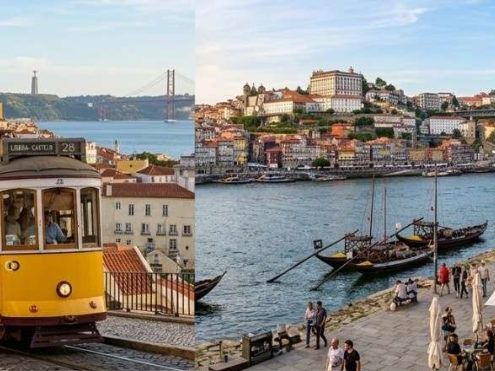
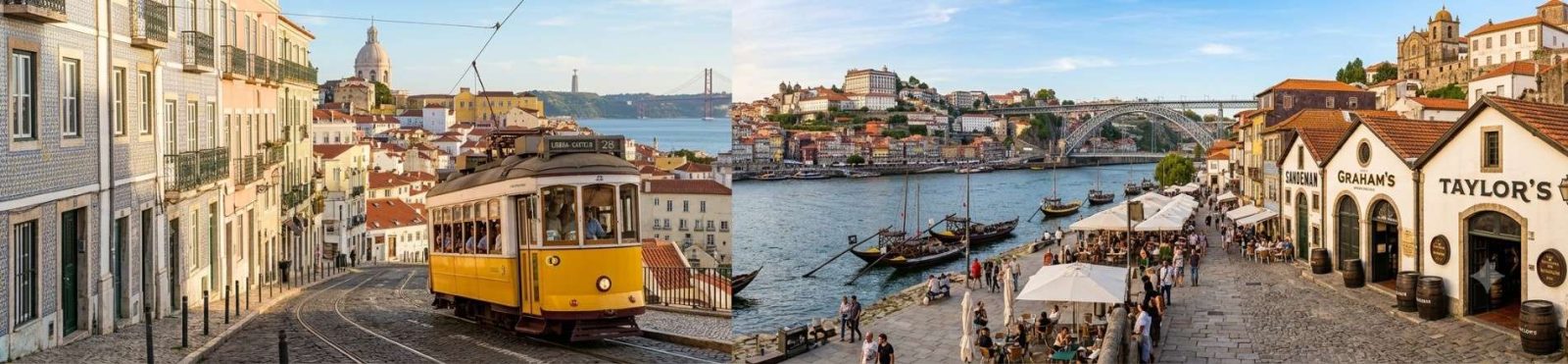
Visitors should explore the Ribeira riverfront, cross the double-decker Dom Luís I Bridge to the port wine lodges of Vila Nova de Gaia, and admire the blue-and-white tile panels inside São Bento railway station. The Clérigos Tower offers views across the rooftops, and the Palácio da Bolsa and the Cathedral are close by. A short river cruise passing under the city's bridges is a relaxed way to see Porto from the water.
Two to three nights suit most itineraries. The terraced vineyards of the Douro Valley make a scenic day trip of about an hour and a half by road each way, and the historic towns of Guimarães and Braga are each about an hour away. Lisbon is about three hours by train.
For groups, a Douro river cruise and the illuminated riverfront in the evening are memorable and suit travellers of all ages.
Practical Information
Useful to know before your group arrives in Porto.
Loading typical weather…
Typical weather is not available right now. Please try again later.
| High °C |
|---|
| Low °C |
| Rainy days |
Porto has a mild Atlantic climate: warm, fairly dry summers and cool, rainy winters, with sea mist on some mornings.
- Spring (March–May): highs rising from about 16°C to 20°C, with showers.
- Summer (June–August): highs around 24–26°C, sunny and rarely uncomfortably hot in the city.
- Autumn (September–November): highs falling from about 24°C to 16°C, with rain increasing later.
- Winter (December–February): highs around 13–15°C, frequently wet and windy.
May to October is the best time to visit, and September is harvest season in the Douro Valley. Bring a rain jacket outside summer and comfortable shoes for steep, cobbled streets.
- Arriving: Porto Airport (Francisco Sá Carneiro) lies about 11 kilometres north of the centre. The metro reaches the city centre in about 30 minutes, and a taxi takes about 20–25 minutes.
- Getting around: The metro, buses, historic trams and the Guindais funicular serve the city, though the centre is best seen on foot.
- Tickets: The rechargeable Andante card is used on the metro, buses and suburban trains; validate it before every journey. Day tickets are available.
- Groups: The Ribeira district is steep with narrow lanes, so coaches set down at points above or beside the riverfront and groups walk down.
For Indian travellers, an eSIM or European data plan bought before travel usually costs much less than an Indian international roaming pack. Prepaid SIM cards are sold at the airport and in phone shops; a passport is needed at purchase. An EU SIM or eSIM also works in other EU/EEA countries under EU roaming rules.
Free Wi-Fi is common in hotels and cafés. Portugal uses 230 V with Type C/F sockets; Indian Type D plugs do not fit, so bring a universal adapter.
Porto has a moderate number of Indian and Nepali restaurants, enough for a group meal or two, with more choice in Lisbon. Vegetarian dishes are offered at most of them, Jain meals should be requested in advance through the DMC, and halal food is available at a few South Asian eateries.
The city's best-known dish, the francesinha, is a meat sandwich, but vegetarian-friendly local choices include vegetable soup (sopa de legumes), caldo verde ordered without sausage, broa corn bread and Portuguese cheeses; the pastel de nata custard tart contains egg. Pingo Doce, Continente and Lidl supermarkets are useful for fruit, milk, bread and snacks, especially for a Douro Valley day.