 France
City guide · France
Strasbourg
About Strasbourg
Strasbourg is the main city of Alsace in north-eastern France, on the Rhine and the border with Germany. Its history alternated between French and German rule, giving it a distinctive blend of both cultures, and it is home to the Council of Europe and the official seat of the European Parliament.
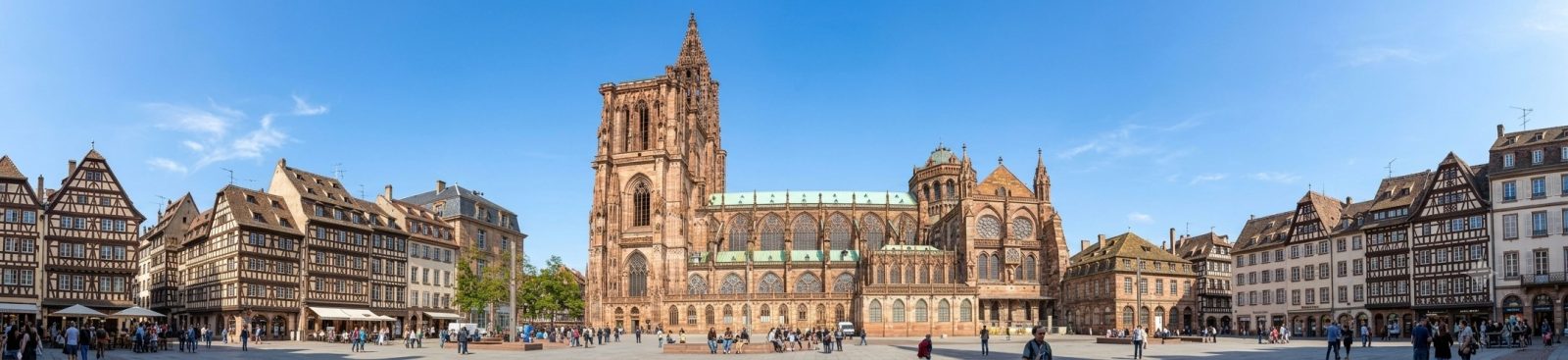
The historic island at its heart, the Grande Île, is a UNESCO World Heritage Site. Highlights include the Gothic Strasbourg Cathedral with its astronomical clock, the half-timbered houses and canals of Petite France, Place Kléber and a boat tour on the River Ill past the European district.
One to two nights suit most itineraries. Colmar is about 30 minutes away by train, and the villages of the Alsace Wine Route make a popular day by road. Paris is about two hours away by high-speed train, and the German Black Forest is within easy reach across the Rhine.
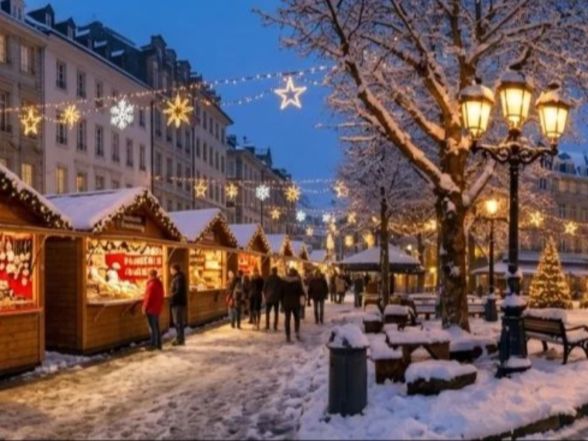
Strasbourg's Christmas market, one of the oldest in France, makes December a popular time for groups, and the European institutions interest student and educational groups.
Practical Information
Useful to know before your group arrives in Strasbourg.
Loading typical weather…
Typical weather is not available right now. Please try again later.
| High °C |
|---|
| Low °C |
| Rainy days |
Strasbourg has a semi-continental climate, with warm summers and cold winters.
- Spring (March–May): mild and changeable, with highs reaching around 19–20°C in May.
- Summer (June–August): warm, with highs around 24–26°C and occasional thunderstorms.
- Autumn (September–November): pleasant early on, then cool, damp and foggy.
- Winter (December–February): cold, with highs around 3–5°C, frost and occasional snow.
May to September is comfortable for sightseeing, and December for the Christmas market. Pack layers, a rain jacket and comfortable walking shoes, plus a warm coat in winter.
- Arriving: Strasbourg Airport (Entzheim) is linked to the main railway station by a shuttle train in about 10 minutes. Many international travellers instead fly into Paris and take the high-speed train, about two hours.
- Getting around: an extensive tram network and buses serve the city, and a tram line crosses the Rhine to Kehl in Germany. The historic centre is compact and best seen on foot or by boat.
- Tickets: buy tickets before boarding and validate them; day passes are available.
- Groups: the Grande Île is largely pedestrianised, so coaches drop groups at the edge of the centre.
Mobile data: for Indian travellers, an eSIM or a European data plan bought before travel usually costs much less than Indian international roaming packs. Local prepaid SIMs are sold in phone shops (passport needed at purchase). France is in the EU, so an EU SIM or eSIM also works across other EU/EEA countries, including neighbouring Germany, under EU roaming rules.
Wi-Fi: free Wi-Fi is common in hotels and cafés.
Power: 230 V with Type C/E sockets. Indian Type D plugs do not fit, so carry a universal adapter.
Strasbourg has a fair choice of Indian restaurants for a city of its size. Halal food is widely available at Turkish, North African and Middle Eastern places. Vegetarian options are reasonably easy to find, and Jain meals should be requested in advance through the DMC or restaurant.
Alsatian dishes that suit vegetarians include tarte flambée (flammekueche) in its cheese or vegetarian versions, freshly baked bretzels and kougelhopf cake. Supermarkets such as Carrefour, Monoprix and Lidl are handy for snacks, fruit, milk and bread.