 Spain
Spain
City guide · Spain
Barcelona
About Barcelona
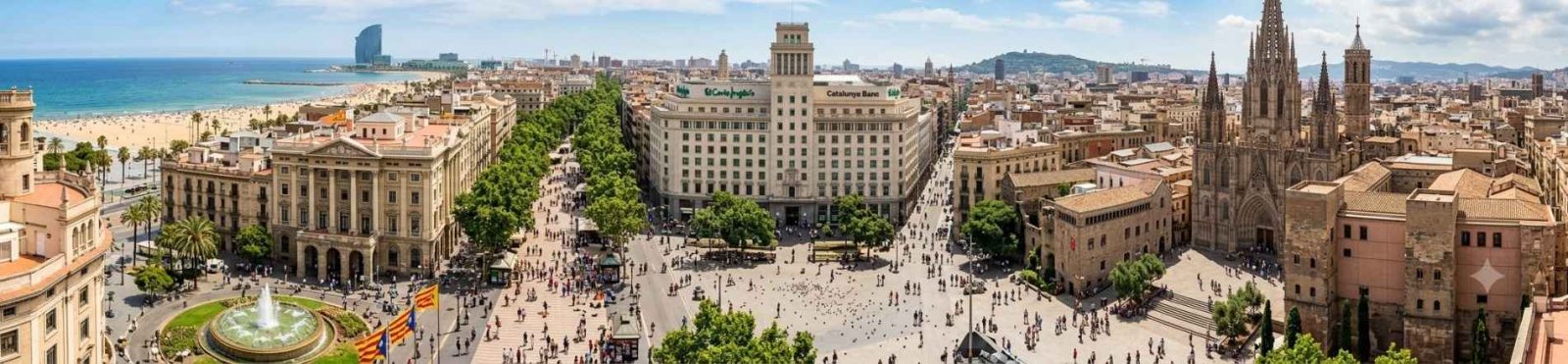
Barcelona, capital of Catalonia, sits on the Mediterranean between the sea and the hills of Collserola. A Roman settlement that grew into a great medieval trading port, it is today one of Spain's liveliest cities, known for its architecture, beaches and long evenings outdoors.
First-time visitors usually focus on the work of Antoni Gaudí: the Sagrada Família, Park Güell, Casa Batlló and Casa Milà (La Pedrera). The Gothic Quarter, La Rambla and the Boqueria market, the hill of Montjuïc and the beachfront at Barceloneta complete a well-rounded visit.
Three nights suit most itineraries. Popular day trips include the mountain monastery of Montserrat (about an hour away) and the towns of Girona and Sitges, each well under an hour by train. Madrid is about three hours away by high-speed train, which makes the two cities an easy pairing.
Many Indian travellers know the region from the film Zindagi Na Milegi Dobara, parts of which were shot in Barcelona and along the Costa Brava. Shopping on Passeig de Gràcia and time on the beach suit families and groups alike.
Practical Information
Useful to know before your group arrives in Barcelona.
Loading typical weather…
Typical weather is not available right now. Please try again later.
| High °C |
|---|
| Low °C |
| Rainy days |
Barcelona has a mild Mediterranean climate with plenty of sunshine through the year.
- Summer (June–August): warm and humid, with highs around 28–30°C.
- Autumn (September–November): pleasant early on, around 20–26°C, with heavier showers possible in October.
- Winter (December–February): mild, with highs around 13–15°C and cool nights.
- Spring (March–May): highs rising from about 16°C to 22°C.
April to June and September to October are the most comfortable months for sightseeing. Pack light layers, sun protection and comfortable walking shoes.
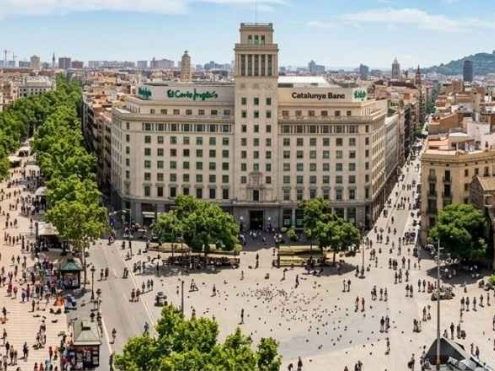
- Arriving: Josep Tarradellas Barcelona–El Prat Airport is about 15 km from the city. The Aerobús express bus reaches Plaça de Catalunya in about 35 minutes; trains and metro line L9 Sud also serve the airport, and a taxi takes around 30 minutes.
- Getting around: the metro is the quickest way to cover longer distances, backed by buses and trams. Multi-journey tickets and travel cards for several days are better value than single tickets.
- On foot: the Gothic Quarter and El Born are best explored on foot. Keep valuables secure on La Rambla and on the metro, where pickpocketing is common.
- Groups: the Sagrada Família and Park Güell use timed entry, so book well ahead; coaches set down at designated points and groups walk into the narrow lanes of the old town.
For travellers from India, an eSIM or a European data plan bought before departure usually costs much less than Indian international roaming packs. Local prepaid SIM cards are sold at the airport and in phone shops; a passport is needed to buy one. An EU SIM or eSIM also works in other EU/EEA countries under EU roaming rules.
Free Wi-Fi is common in hotels and cafés. The power supply is 230 V with Type C/F sockets; Indian Type D plugs do not fit, so bring a universal adapter.
Barcelona has a good choice of Indian and Pakistani restaurants, many of them in and around El Raval, home to a long-established South Asian community where halal food is also easy to find. Vegetarian options are widely available across the city. Jain meals are best requested in advance through the DMC or the restaurant.
Local dishes that suit vegetarians include pa amb tomàquet (bread rubbed with tomato and olive oil), patatas bravas and escalivada (roasted peppers and aubergine). Tortilla española is vegetarian but contains egg. For snacks, fruit, milk and bread, look for Mercadona, Carrefour, Lidl and Dia.