 Denmark
City guide · Denmark
Copenhagen
About Copenhagen
Copenhagen, the capital of Denmark, is a relaxed harbour city known for its colourful waterfront, royal palaces, design culture and cycling. Once a small fishing settlement, it grew into the seat of the Danish monarchy and a major trading port.
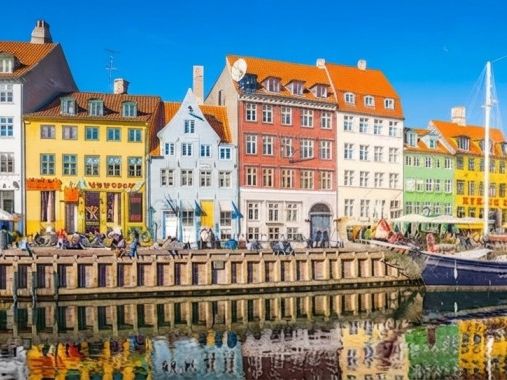
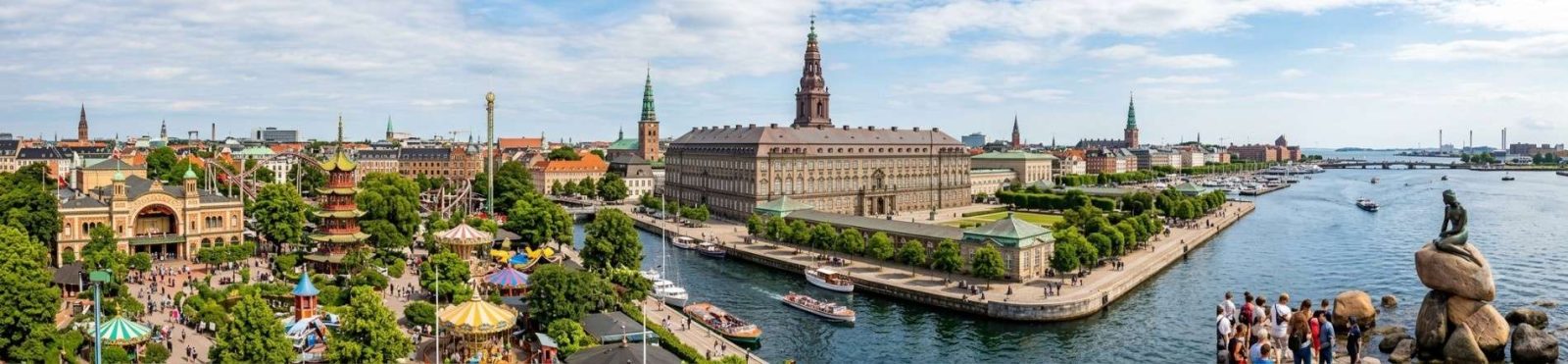
Highlights for first-time visitors include the painted houses of Nyhavn, Tivoli Gardens (opened in 1843), Amalienborg Palace and its changing of the guard, Christiansborg Palace, Rosenborg Castle, the Little Mermaid statue and the pedestrian shopping street Strøget. A canal boat tour is an easy way to see the city from the water.
Two to three nights work well. Malmö in Sweden is about 35–40 minutes away by train across the Øresund Bridge, Roskilde and its Viking Ship Museum about 25 minutes, and Kronborg Castle in Helsingør, the setting of Hamlet, about 45 minutes. Copenhagen combines naturally with Oslo by overnight ferry and with Stockholm by train.
Tivoli Gardens is particularly popular with families and groups, especially in summer and during its Christmas season.
Practical Information
Useful to know before your group arrives in Copenhagen.
Loading typical weather…
Typical weather is not available right now. Please try again later.
| High °C |
|---|
| Low °C |
| Rainy days |
Copenhagen has a mild, maritime climate with cool summers, damp winters and frequent wind.
- Spring (March–May): cool and bright, with highs rising to around 15–16°C by May.
- Summer (June–August): mild, with highs around 20–22°C and very long daylight hours.
- Autumn (September–November): cooling quickly, with more rain and wind.
- Winter (December–February): cold and grey, with highs around 2–4°C and short days.
May to September is the best time to visit. Pack layers, a windproof rain jacket and comfortable shoes; even summer evenings can feel cool by the water.
- Arriving: Copenhagen Airport (Kastrup) is linked to the centre by metro and train, taking about 15 minutes.
- Getting around: the metro runs around the clock, supported by S-trains, buses and harbour buses. The centre is compact and easy to walk, and cycling is a very popular way to get around.
- Tickets: fares are zone-based; Rejsekort and day or multi-day passes are convenient, and the Copenhagen Card combines transport with museum entry.
- Groups: coaches can drop close to most major sights, but the centre has many cycle lanes and pedestrian streets, so walking tours work best between stops.
Mobile data: for Indian travellers, an eSIM or a European data plan bought before travel usually costs much less than Indian international roaming packs. Local prepaid SIMs are sold at the airport and in shops (passport needed at purchase). Denmark is in the EU, so an EU SIM or eSIM also works across other EU/EEA countries under EU roaming rules.
Wi-Fi: free Wi-Fi is common in hotels, cafés and many stations and trains.
Power: 230 V with Type C/K sockets. Indian Type D plugs do not fit, so carry a universal adapter.
Copenhagen has a good number of Indian and Pakistani restaurants, and vegetarian food is widely available across the city. Halal food is found at many Middle Eastern and Turkish places. Jain meals should be requested in advance through the DMC or restaurant.
Danish dishes that suit vegetarians include smørrebrød (open sandwiches) with egg, potato or cheese toppings, æbleskiver (small round pancakes) and Danish pastries. Supermarkets such as Netto, Føtex, Rema 1000 and Lidl are handy for snacks, fruit, milk and bread.