 Germany
City guide · Germany
Berlin
About Berlin
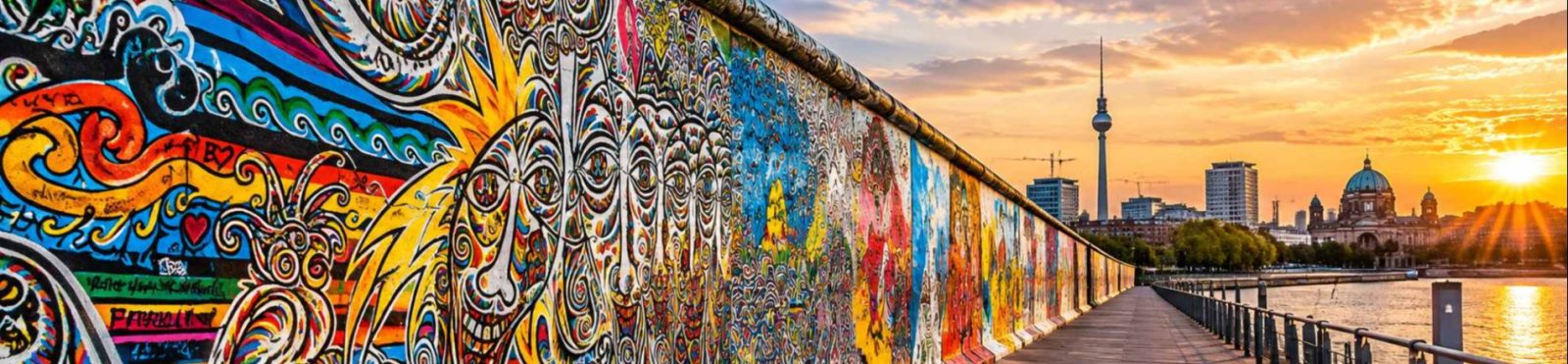
Berlin, the capital of Germany, is a large, green and creative city whose recent history is visible at every turn. Divided by the Berlin Wall from 1961 until 1989, it was reunified with the rest of Germany in 1990 and is now known for its museums, architecture and cultural life.
First-time visitors usually see the Brandenburg Gate, the Reichstag building with its glass dome (visits need advance registration), the Memorial to the Murdered Jews of Europe, Checkpoint Charlie, the East Side Gallery and the Berlin Wall Memorial on Bernauer Straße. Museum Island is a UNESCO World Heritage Site, and the Kurfürstendamm is the classic shopping boulevard.
Two to three nights suit most itineraries. Potsdam, with Sanssouci Palace and gardens, is under an hour away by train, and Dresden is about two hours by train. Berlin combines easily with Prague, Hamburg and Copenhagen.
Student and educational groups find Berlin particularly rewarding for its Cold War and 20th-century history, and the city's zoo and aquarium suit families.
Practical Information
Useful to know before your group arrives in Berlin.
Loading typical weather…
Typical weather is not available right now. Please try again later.
| High °C |
|---|
| Low °C |
| Rainy days |
Berlin has a temperate climate with warm summers and cold, grey winters.
- Spring (March–May): mild and changeable, with highs rising to around 19–20°C by May.
- Summer (June–August): warm, with highs around 23–25°C, occasional heatwaves and thunderstorms.
- Autumn (September–November): pleasant early on, then cool and damp.
- Winter (December–February): cold, with highs around 2–4°C, frosty nights and occasional snow.
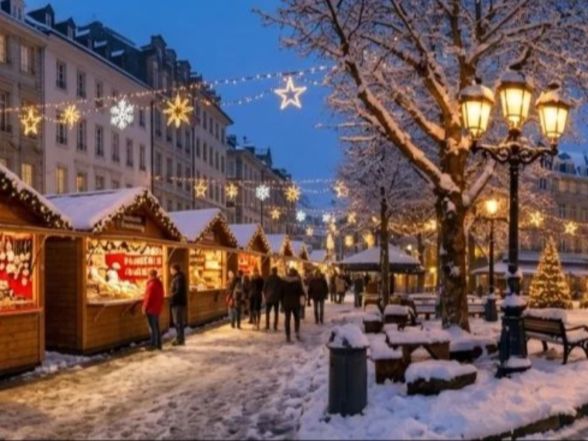
May to September is best for sightseeing, and December for Christmas markets. Pack layers, a rain jacket and comfortable shoes, as distances between sights are large.
- Arriving: Berlin Brandenburg Airport (BER) is linked to the city by the FEX Airport Express and regional trains, reaching Berlin Hauptbahnhof in about 30 minutes. The airport is in fare zone C, so the ticket must cover zones A, B and C.
- Getting around: the U-Bahn, S-Bahn, trams and buses form an extensive network. Bus routes 100 and 200 pass many major sights.
- Tickets: paper tickets from machines must be validated before travel; day tickets and the Berlin WelcomeCard are convenient for visitors.
- Groups: the city is spread out, so a coach city tour is an efficient way to cover the main sights before exploring areas on foot.
Mobile data: for Indian travellers, an eSIM or a European data plan bought before travel usually costs much less than Indian international roaming packs. Local prepaid SIMs are sold in phone shops and some supermarkets (passport needed for registration). Germany is in the EU, so an EU SIM or eSIM also works across other EU/EEA countries under EU roaming rules.
Wi-Fi: free Wi-Fi is common in hotels and cafés and on many trains.
Power: 230 V with Type C/F sockets. Indian Type D plugs do not fit, so a universal adapter is needed.
Berlin has a wide choice of Indian and Pakistani restaurants, and vegetarian and vegan food is very easy to find. Halal food is widely available, especially at the many Turkish and Middle Eastern places. Jain meals should be requested in advance through the DMC or restaurant.
German foods that suit vegetarians include Kartoffelpuffer (potato pancakes), Käsespätzle (cheese noodles) and freshly baked Brezeln (pretzels). Supermarkets such as REWE, Edeka, Lidl, Aldi and Kaufland are useful for snacks, fruit, milk and bread; most are closed on Sundays, though station shops stay open.
Tailor-made for your group
Planning Berlin for Your Group?
We don't list ready-made sightseeing or itineraries for Berlin yet, but our team can plan it for you: hotels, guided sightseeing, transfers and onward connections. Share your dates and group size and we'll send a proposal built around Berlin.
Itineraries in Germany
None of our set itineraries includes an overnight stay in Berlin yet. These Germany itineraries can be adapted to include it.