 Italy
Italy
City guide · Italy
Venice
About Venice
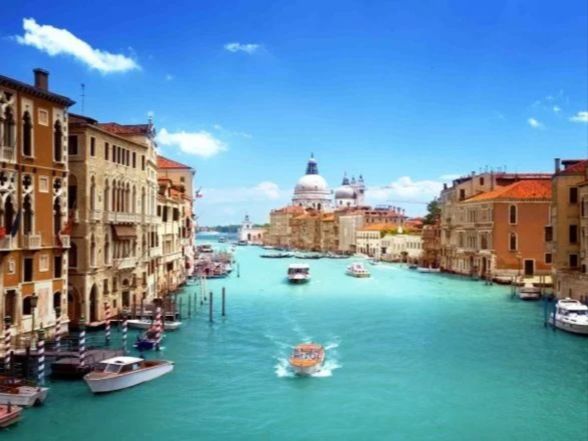
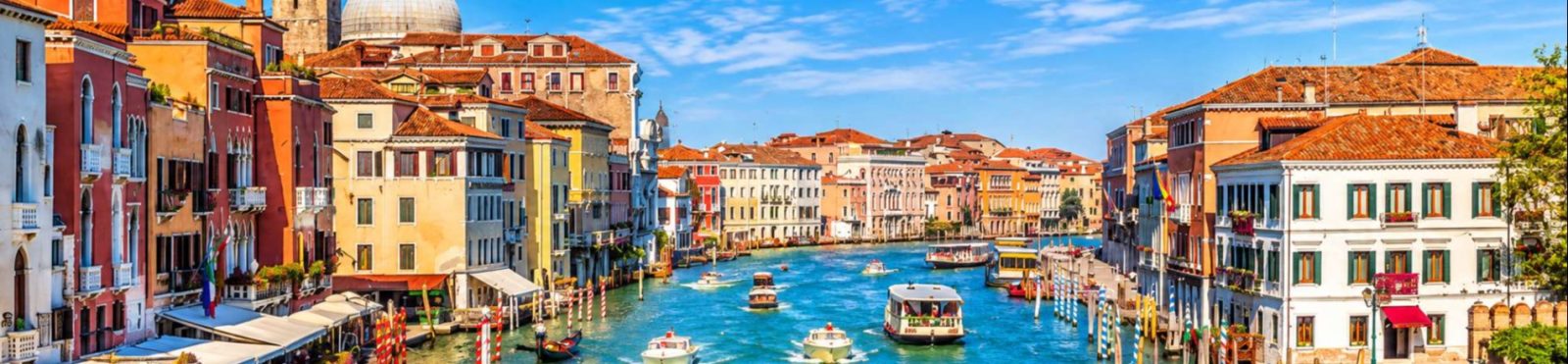
Venice is built on more than a hundred small islands in a lagoon at the head of the Adriatic. For centuries it was the capital of a powerful maritime republic, and today its canals, bridges and palaces, with no cars or roads, make it one of the most distinctive cities in the world.
Highlights include St Mark's Square with St Mark's Basilica and the Campanile, the Doge's Palace and the Bridge of Sighs, the Rialto Bridge and the Grand Canal. A gondola ride and a vaporetto (water bus) trip along the Grand Canal are classic experiences, and the islands of Murano, known for glass-making, and Burano, with its brightly coloured houses, make an easy half-day excursion.
One or two nights is typical, and many groups visit on a day trip from the mainland. Padua is about 30 minutes away by train, Verona about one and a quarter hours, Florence just over two hours and Milan about two and a half hours, so Venice fits well into a northern Italy circuit.
The pre-Lenten Carnival, with its masks and costumes, is a colourful time to visit, though the city is very busy then.
Practical Information
Useful to know before your group arrives in Venice.
Loading typical weather…
Typical weather is not available right now. Please try again later.
| High °C |
|---|
| Low °C |
| Rainy days |
Venice has a humid climate with warm summers and cool, damp winters.
- Spring (March–May): mild, highs from around 13°C to 22°C.
- Summer (June–August): warm and humid, highs around 27–29°C, with mosquitoes on still evenings.
- Autumn (September–November): cooling from around 24°C to 12°C; this is the main season for acqua alta (high water) flooding in low-lying areas.
- Winter (December–February): cold and often foggy, highs around 6–9°C.
April to June and September to October are the most pleasant times. Pack layers, comfortable non-slip shoes for many bridges and steps, and a rain jacket in autumn and winter.
- Arriving: Venice Marco Polo Airport is on the mainland. Buses reach Piazzale Roma in about 20–30 minutes, and Alilaguna water buses and private water taxis go directly into the lagoon city. The railway station is Venezia Santa Lucia, on the Grand Canal.
- Getting around: the city is explored on foot and by vaporetto (water bus); there are no cars. Travel passes for one or more days are useful for several boat trips.
- Groups: coaches can only reach Piazzale Roma or Tronchetto, at the edge of the city. From there groups continue on foot or by private boat; many groups stay on the mainland and come in by coach or train.
- Luggage: many bridges have steps, so travel light or arrange porter or boat transfers to hotels.
Mobile data: for Indian travellers, an eSIM or a European data plan bought before departure usually costs much less than Indian international roaming packs. Local prepaid SIM cards are sold at the airport and in phone shops; a passport is needed at purchase. A SIM or eSIM from any EU/EEA country works in Italy under EU roaming rules.
Wi-Fi: free Wi-Fi is common in hotels, cafés and many public places.
Power: 230 V with Type C/F/L sockets. Indian Type D plugs do not fit, so bring a universal adapter.
The historic centre of Venice has only a limited number of Indian restaurants, so groups often arrange Indian meals in advance through the DMC. Vegetarian dishes are available almost everywhere, while halal options are limited. Jain meals should be requested well in advance. Local cuisine is heavily based on seafood, so ask about ingredients.
Vegetarian-friendly choices include pasta al pomodoro, pizza margherita and risotto with vegetables (ask for it to be made with vegetable stock). Italian gelato is a favourite with all ages. Coop and Conad supermarkets in the city are useful for snacks, fruit and milk.