 Hungary
City guide · Hungary
Budapest
About Budapest
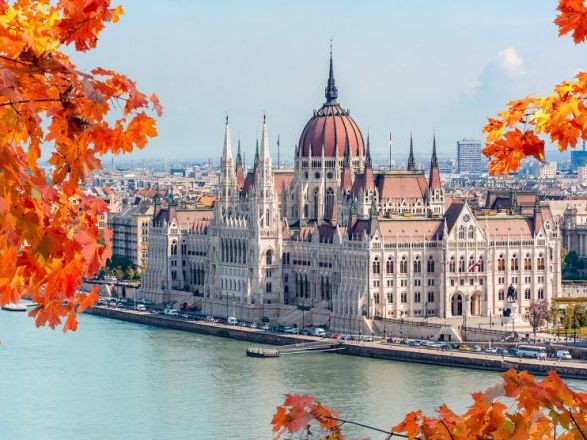
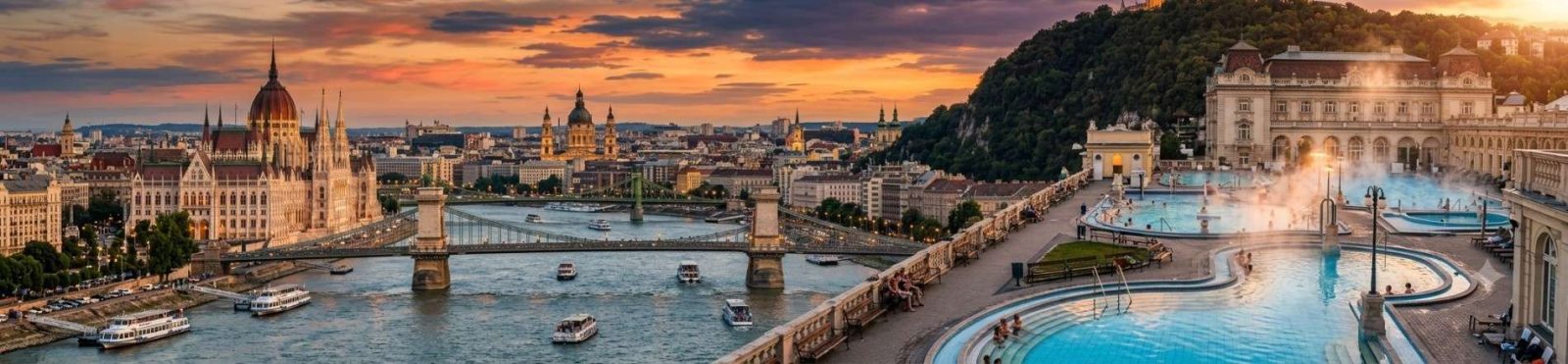
Budapest, the capital of Hungary, straddles the Danube: hilly Buda on the west bank and flat, busy Pest on the east. The two were formally united with Óbuda in 1873, and the city is known for its grand 19th-century architecture, its thermal baths and its riverside views.
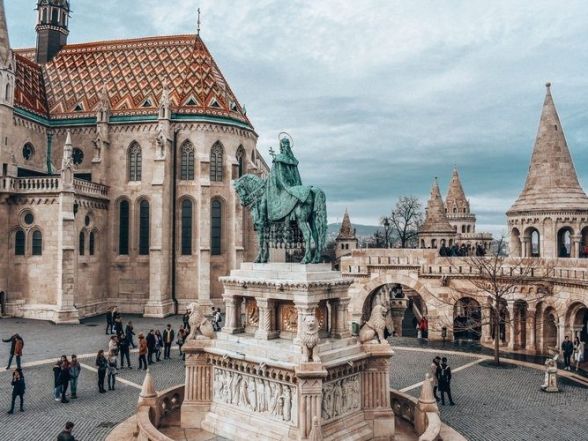
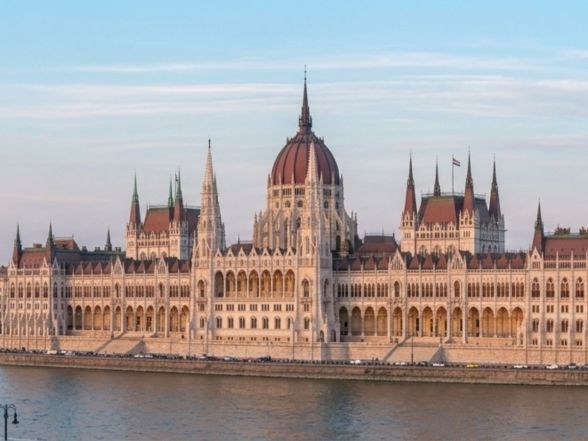
Highlights include the Hungarian Parliament Building, the Buda Castle district with Matthias Church and Fisherman's Bastion, the Chain Bridge, St Stephen's Basilica, Andrássy Avenue leading to Heroes' Square, and the Great Market Hall. An evening Danube cruise to see the illuminated Parliament and bridges is a favourite with groups.
Two to three nights suits most itineraries. Vienna and Bratislava are each about two and a half to three hours away by train, which makes Budapest a natural part of a Central Europe circuit. The riverside town of Szentendre, about 40 minutes away by suburban train, and the Danube Bend make easy half-day or full-day trips.
A visit to one of the thermal baths, such as the Széchenyi Baths in City Park or the Rudas Baths beside the Danube, is a relaxed experience for families and mixed-age groups.
Practical Information
Useful to know before your group arrives in Budapest.
Loading typical weather…
Typical weather is not available right now. Please try again later.
| High °C |
|---|
| Low °C |
| Rainy days |
Budapest has a continental climate with warm summers and cold winters.
- Spring (March–May): mild and changeable, highs from around 11°C to 22°C.
- Summer (June–August): warm to hot, highs around 26–28°C, sometimes above 30°C.
- Autumn (September–November): pleasant early on, cooling from around 22°C to 8°C.
- Winter (December–February): cold, highs around 1–5°C, with frost and occasional snow.
April to June and September to October are the most comfortable months. In winter bring a warm coat, gloves and layers; in summer, light clothing and comfortable shoes for the hills of Buda.
- Arriving: Budapest Ferenc Liszt International Airport is about 16 km from the centre. A dedicated airport express bus reaches the city centre in around 40 minutes, and a taxi or transfer takes about 30–40 minutes depending on traffic.
- Getting around: four metro lines, trams and buses cover the city. Tram 2 along the Pest riverbank is a scenic ride past the Parliament. Line M1 under Andrássy Avenue is one of the oldest underground railways in continental Europe.
- Tickets: buy tickets before travelling and validate paper tickets at the start of each journey; inspectors check regularly. Travel passes for 24 or 72 hours are convenient for visitors.
- Groups: the Castle district has restricted vehicle access, so coach groups usually walk up or use the funicular or local buses.
Mobile data: for Indian travellers, an eSIM or a European data plan bought before departure usually costs much less than Indian international roaming packs. Local prepaid SIM cards are sold at the airport and in phone shops; a passport is needed at purchase. A SIM or eSIM from any EU/EEA country works in Hungary under EU roaming rules.
Wi-Fi: free Wi-Fi is common in hotels, cafés and many public places.
Power: 230 V with Type C/F sockets. Indian Type D plugs do not fit, so bring a universal adapter.
Budapest has a reasonable number of Indian and Pakistani restaurants, mostly in the central districts of Pest. Halal food is available at Turkish and Middle Eastern eateries, and vegetarian options have become easy to find in the city centre. Jain meals should be requested in advance through the DMC or the restaurant.
Hungarian cooking is meat-heavy, but some local dishes suit vegetarians: lángos (fried flatbread usually topped with sour cream and cheese), főzelék (a thick vegetable stew; check that no meat is added on top) and kürtőskalács (sweet chimney cake). Spar, Lidl, Aldi and Tesco supermarkets are convenient for snacks, fruit and milk.