 Slovenia
City guide · Slovenia
Ljubljana
About Ljubljana
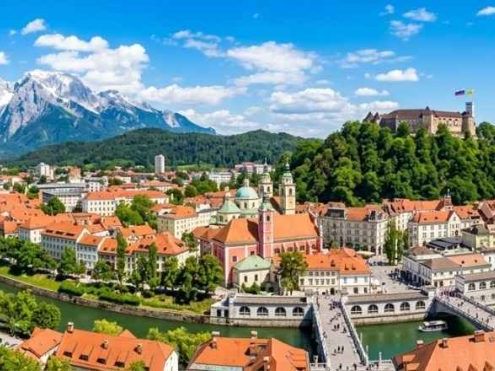
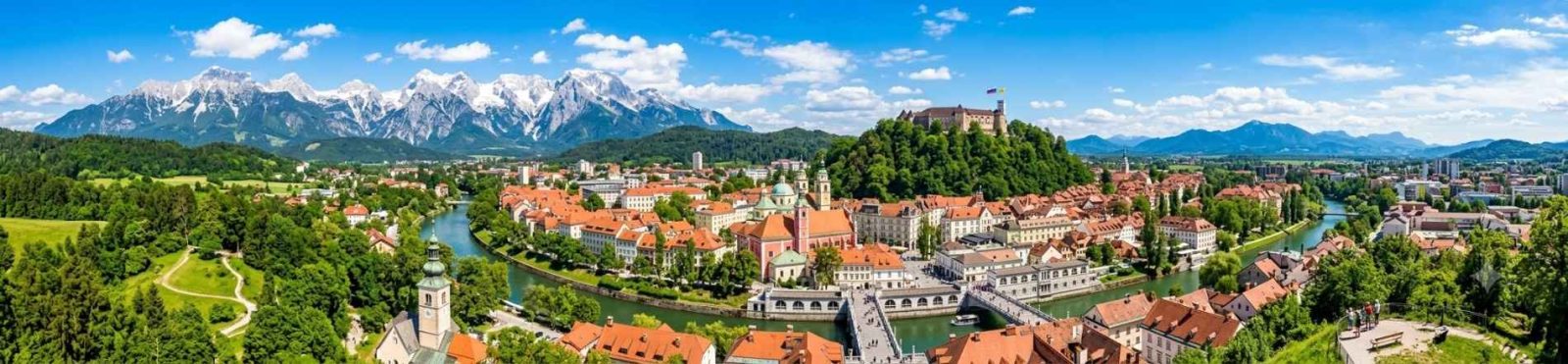
Ljubljana, the capital of Slovenia, is a small, green and relaxed city on the Ljubljanica river. Much of its character comes from the architect Jože Plečnik, who reshaped the centre in the first half of the 20th century, and its riverside centre is largely car-free.
Highlights include Prešeren Square with its Franciscan church, the Triple Bridge and Dragon Bridge, the Central Market with Plečnik's riverside colonnades, and Ljubljana Castle, reached by funicular for views over the red roofs. Tivoli Park offers space to relax.
One to two nights suit most itineraries. Lake Bled is under an hour away by road and Postojna Cave about 45 minutes, with Predjama Castle nearby. Ljubljana combines well with Zagreb, Salzburg or Venice, which are within about two to three hours by road.
The compact, walkable centre and nearby lakes and caves make Ljubljana an easy, family-friendly stop on a Central Europe or Balkans tour.
Practical Information
Useful to know before your group arrives in Ljubljana.
Loading typical weather…
Typical weather is not available right now. Please try again later.
| High °C |
|---|
| Low °C |
| Rainy days |
Ljubljana has a continental climate with warm summers and cold, often foggy winters.
- Summer (June–August): warm, with highs around 26–28°C and occasional thunderstorms.
- Autumn (September–November): cooling from about 21°C to 8°C, with rain and fog.
- Winter (December–February): highs around 3–5°C, frost at night and some snow.
- Spring (March–May): highs from about 12°C to 22°C.
May to September is the best time to visit. Pack layers, a rain jacket and comfortable shoes, and a warm coat in winter.
- Arriving: Ljubljana Jože Pučnik Airport is about 25 km north of the city, around 30 minutes by taxi or shuttle and longer by bus. Many groups arrive via Venice, Zagreb or Vienna and continue by road.
- Getting around: the centre is compact and best explored on foot. City buses are paid with the Urbana card rather than cash.
- Groups: the historic centre is car-free, so coaches set down at its edge and groups continue on foot.
For travellers from India, an eSIM or a European data plan bought before departure usually costs much less than Indian international roaming packs. Local prepaid SIM cards are sold at the airport and in phone shops; a passport is needed to buy one. An EU SIM or eSIM also works in other EU/EEA countries under EU roaming rules.
Free Wi-Fi is common in hotels and cafés. The power supply is 230 V with Type C/F sockets; Indian Type D plugs do not fit, so bring a universal adapter.
Ljubljana has only a few Indian restaurants, so choice is limited; Vienna and Zagreb offer more. Vegetarian dishes are increasingly common, and halal food is mainly found in Balkan and Middle Eastern take-aways. Jain meals should be requested in advance through the DMC or the restaurant, and packed snacks are useful on day trips.
Local dishes that suit vegetarians include štruklji (rolled dumplings, often filled with cottage cheese), potica (a rolled nut cake) and the cream cake of Bled. For snacks, fruit, milk and bread, look for Mercator, Spar, Hofer and Lidl.