 Czech Republic
City guide · Czech Republic
Prague
About Prague
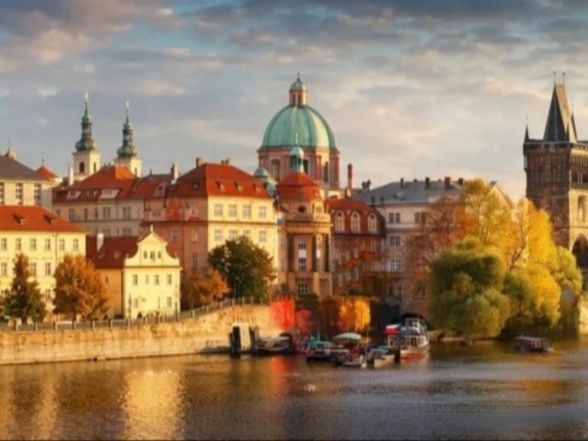
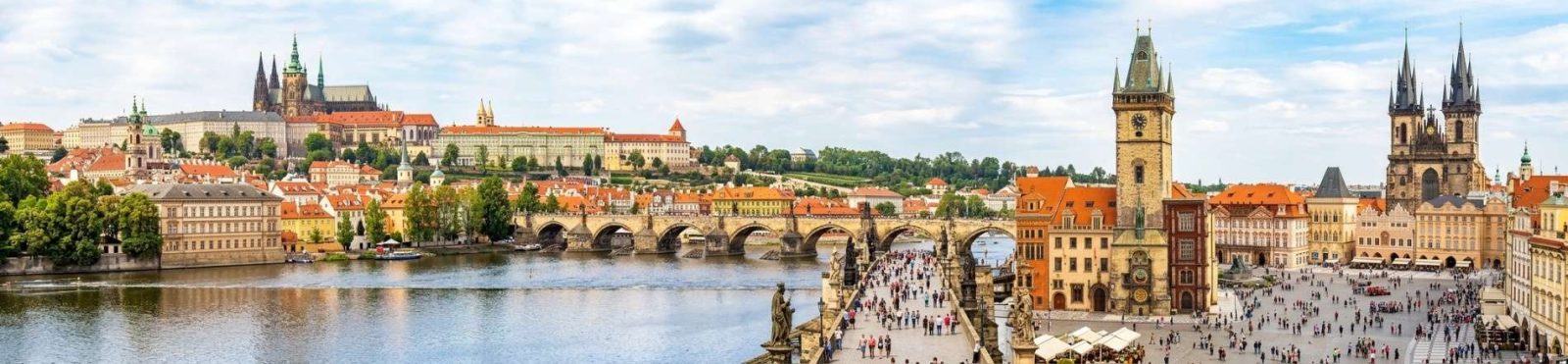
Prague, the capital of the Czech Republic, sits on both banks of the Vltava river and is known for its remarkably well-preserved historic centre of Gothic, Baroque and Art Nouveau buildings. Its historic centre is a UNESCO World Heritage Site, and the city grew to prominence as a royal seat under Emperor Charles IV in the 14th century.
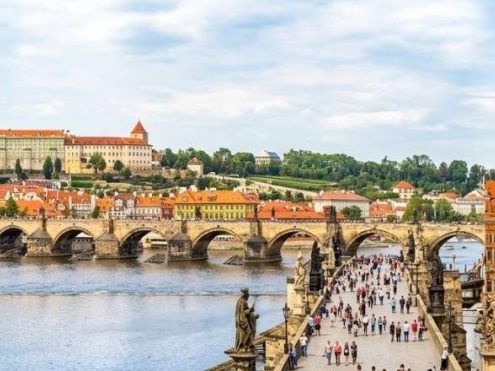
First-time visitors usually walk the Royal Route from the Old Town Square, with its Astronomical Clock and Týn Church, across the statue-lined Charles Bridge to Malá Strana and up to Prague Castle and St Vitus Cathedral. Other highlights include the Jewish Quarter (Josefov), Wenceslas Square, Petřín Hill and a river cruise on the Vltava.
Two to three nights suit most itineraries. Popular day trips include Kutná Hora (about an hour by train or road), Karlovy Vary (about two hours by road) and Český Krumlov (about three hours by road). Prague combines easily with Vienna, Dresden and Berlin by train or coach.
Groups often enjoy an evening river cruise, a classical concert in one of the old churches, and in late November and December the Christmas markets on the Old Town Square and Wenceslas Square.
Practical Information
Useful to know before your group arrives in Prague.
Loading typical weather…
Typical weather is not available right now. Please try again later.
| High °C |
|---|
| Low °C |
| Rainy days |
Prague has a central European climate with warm summers, cold winters and fairly moderate rainfall spread through the year.
- Spring (March–May): mild and changeable, with highs from about 10°C in March to around 19–20°C in May.
- Summer (June–August): warm, with highs around 23–25°C, occasional hot spells and thundery showers.
- Autumn (September–November): pleasant in September, turning cool and grey by November.
- Winter (December–February): cold, with highs around 0–3°C, frosty nights and occasional snow.
May, June and September are the most comfortable months for sightseeing. Pack layers, a light rain jacket and comfortable shoes for cobbled streets, and a warm coat, hat and gloves in winter.
- Arriving: Václav Havel Airport Prague has no rail link; city buses connect it with the metro, and an airport express bus runs to the main railway station. A taxi or private transfer to the centre takes about 30 minutes, depending on traffic.
- Getting around: the metro (three lines), an extensive tram network and buses cover the city. The historic centre is compact and best explored on foot.
- Tickets: tickets are time-based and valid on all modes; paper tickets must be validated when you first board or enter the metro. Day passes are useful for full sightseeing days.
- Groups: much of the Old Town and Malá Strana is restricted to traffic, so coaches drop groups at designated points on the edge and guides lead the way on foot; allow for cobbled, hilly streets towards the castle.
Mobile data: for Indian travellers, an eSIM or a European data plan bought before travel usually costs much less than Indian international roaming packs. Local prepaid SIMs are sold at the airport and in phone shops (passport needed at purchase). As the Czech Republic is in the EU, an EU SIM or eSIM also works across other EU/EEA countries under EU roaming rules.
Wi-Fi: free Wi-Fi is common in hotels, cafés and many trains.
Power: 230 V with Type C/E sockets. Indian Type D plugs do not fit, so bring a universal adapter.
Prague has a good choice of Indian restaurants, many offering vegetarian dishes, so finding familiar food is straightforward. Halal food is available at a number of Middle Eastern and Turkish places. Jain meals are best arranged in advance through the DMC or restaurant.
Traditional Czech food is meat-heavy, but vegetarian options include smažený sýr (fried cheese, usually served with potatoes), bramboráky (potato pancakes) and sweet ovocné knedlíky (fruit dumplings). Supermarkets such as Albert, Billa, Lidl and Kaufland are good for snacks, fruit, milk and bread.