 The Netherlands
City guide · The Netherlands
Amsterdam
About Amsterdam
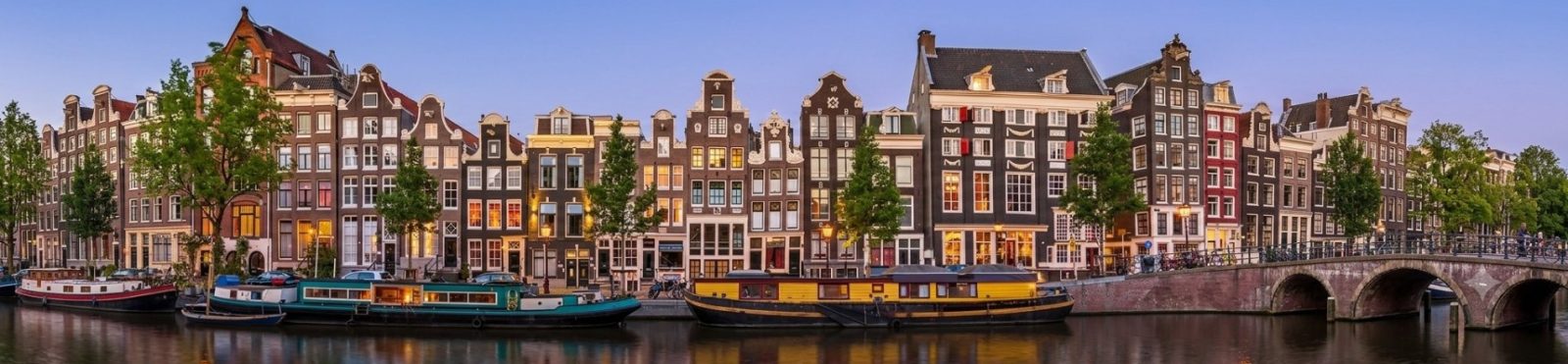
Amsterdam is the capital of the Netherlands, famous for its 17th-century canal ring, a UNESCO World Heritage Site lined with gabled merchants' houses from the Dutch Golden Age. It is a relaxed, international city where bicycles outnumber cars and the canals shape daily life.
Highlights include the Rijksmuseum and the Van Gogh Museum on Museumplein, the Anne Frank House (tickets must be booked online in advance), Dam Square and the Royal Palace, the Jordaan neighbourhood and Vondelpark. A canal cruise is the classic way to see the city and suits all ages.
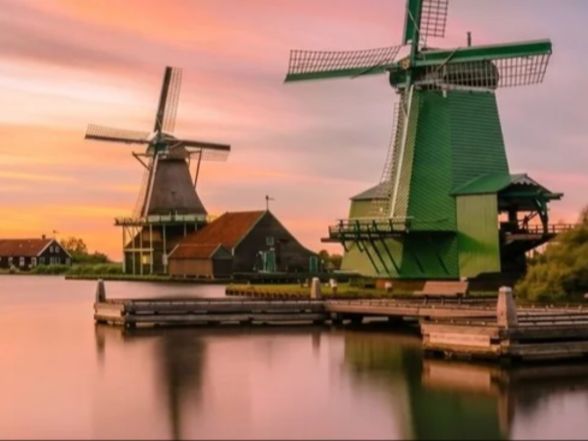
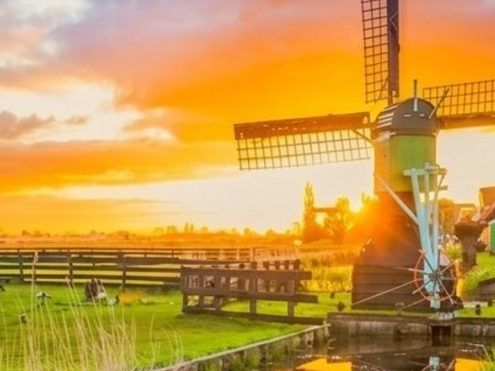
Two to three nights works well. The windmills of Zaanse Schans and the fishing towns of Volendam and Marken are each within about half an hour by road. Utrecht is about 30 minutes by train, Rotterdam and The Hague under an hour, and Brussels just under two hours by high-speed train.
In spring (roughly mid-March to mid-May), the Keukenhof flower gardens near Lisse, about 40 minutes by road, are one of the most popular excursions for Indian groups and families.
Practical Information
Useful to know before your group arrives in Amsterdam.
Loading typical weather…
Typical weather is not available right now. Please try again later.
| High °C |
|---|
| Low °C |
| Rainy days |
Amsterdam has a mild maritime climate with frequent changes and rain in every season.
- Spring (March–May): cool to mild, highs from around 10°C to 18°C.
- Summer (June–August): pleasant, highs around 21–23°C, occasionally warmer.
- Autumn (September–November): cooling from around 19°C to 9°C, windy and wet.
- Winter (December–February): chilly and damp, highs around 5–7°C.
April to September is the most popular period, with tulip season in April. Pack layers, a windproof rain jacket and comfortable walking shoes.
- Arriving: Amsterdam Airport Schiphol is linked to Amsterdam Centraal by frequent trains in about 15–20 minutes.
- Getting around: GVB trams, metro and buses cover the city, and free ferries cross the IJ river behind Centraal station. The centre is very walkable.
- Tickets: on GVB services and trains, check in and check out with an OV-chipkaart, a GVB ticket or a contactless bank card. Multi-day GVB tickets suit visitors.
- Bicycles: red-surfaced lanes are cycle paths; walk on the pavement and look out for bikes.
- Groups: large coaches are not allowed into the historic centre, so groups use designated coach stops outside it.
Mobile data: for Indian travellers, an eSIM or a European data plan bought before departure usually costs much less than Indian international roaming packs. Local prepaid SIM cards are sold at the airport and in phone shops; a passport is needed at purchase. A SIM or eSIM from any EU/EEA country works in the Netherlands under EU roaming rules.
Wi-Fi: free Wi-Fi is common in hotels, cafés and many public places.
Power: 230 V with Type C/F sockets. Indian Type D plugs do not fit, so bring a universal adapter.
Amsterdam has many Indian, Pakistani and Nepali restaurants, as well as Surinamese eateries whose Hindustani-influenced roti and curries will feel familiar. Halal food is widely available at Turkish and Moroccan places, and vegetarian and vegan choices are excellent. Jain meals are best requested in advance through the DMC or the restaurant.
Dutch treats that suit vegetarians include stroopwafels (syrup waffles), poffertjes (mini pancakes) and Dutch pannenkoeken (pancakes with sweet or cheese toppings). Albert Heijn, Jumbo, Dirk and Lidl supermarkets are convenient for snacks, fruit, milk and bread.